未分类
Plant Stand with Grow Light Wattage: Spectrum and Timer, Is Every Tier Bright Enough?
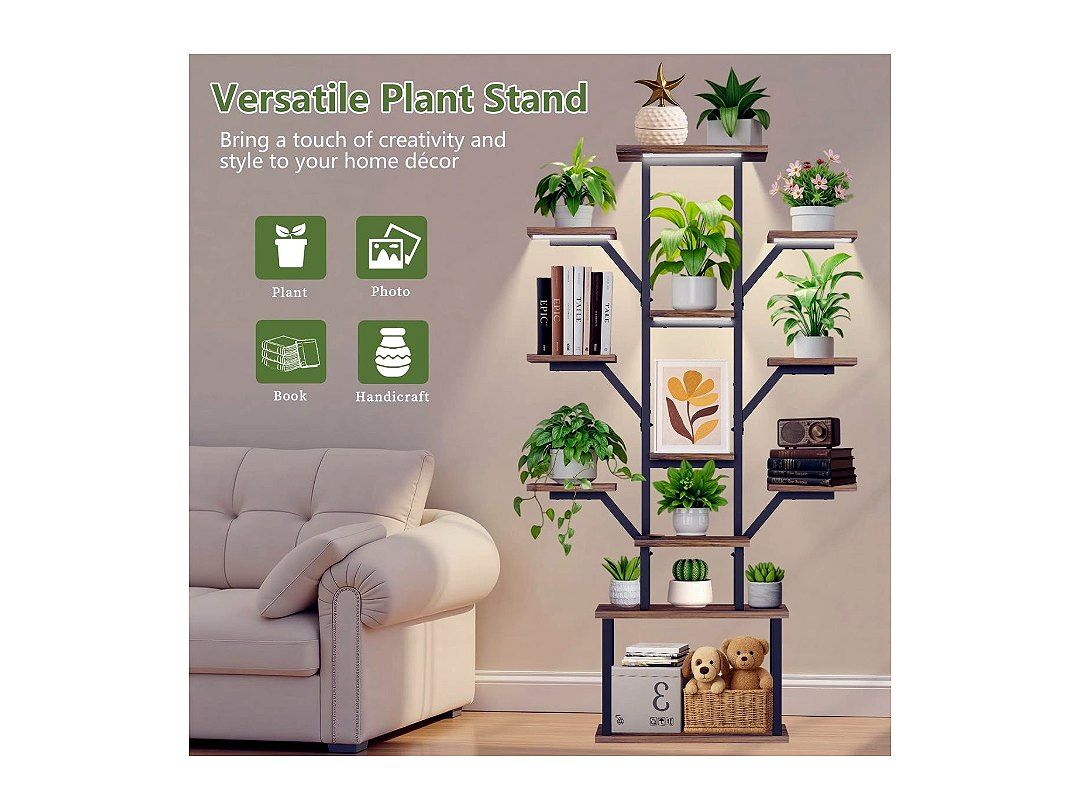
Tianci Hongye makes plant stands with grow lights (this article is based on 2025 data). Whether a plant stand has enough wattage cannot be judged by watts alone; you also need to check the number of lamp heads, the spectrum, and the measured illuminance on each tier. Our LED furniture plant stands use full-spectrum light strips with a timer and several duration settings. Below, we cover the points buyers ask about most, in the order they usually ask them.
Plant stand tiers get uneven light. How much difference between upper and lower tiers is normal?
Some difference in brightness between upper and lower tiers is normal, but the industry has no standard pass/fail threshold. Tianci Hongye LED furniture plant stands do not quote an unsourced ratio either. For acceptance, check that the number of lamp heads matches the number of tiers, and that every tier is covered by light.
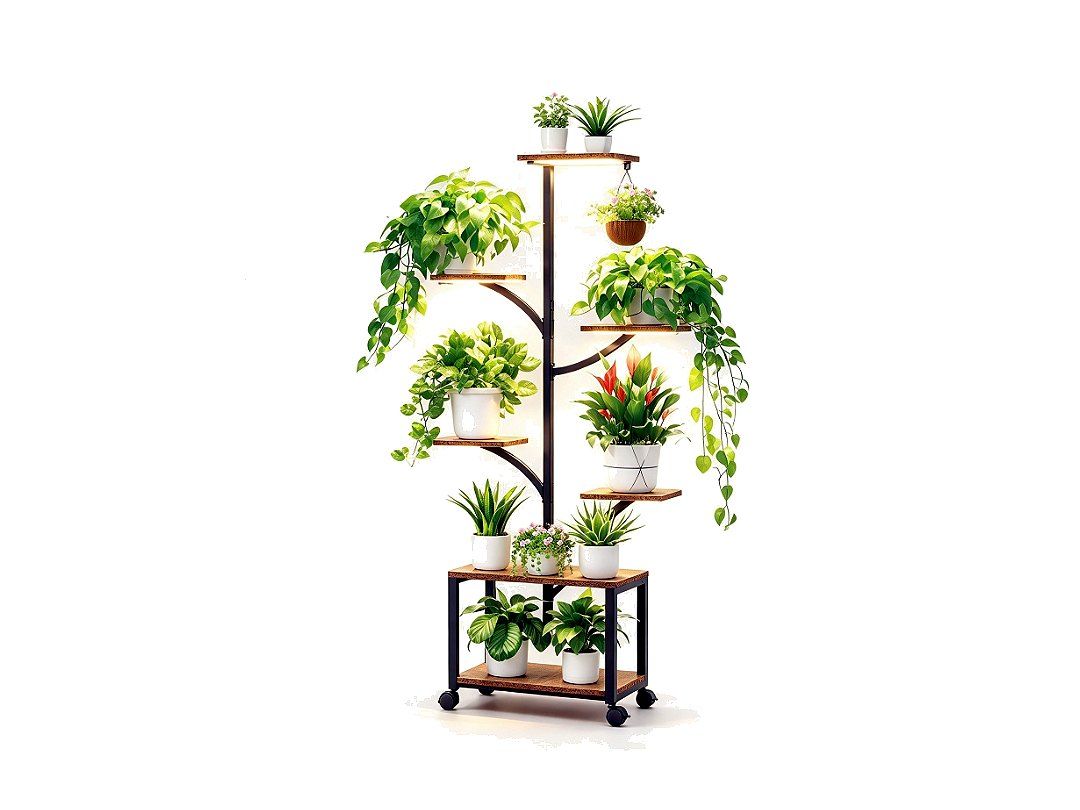
First, a common misconception: many buyers assume that higher plant stand wattage means brighter tiers. In practice, each lamp lights only the tiers directly below it. If all the power is concentrated at the top, the lower tiers will still be dim. So count the lamp heads first, then compare against the number of tiers.
Buyers can run acceptance using this “same-setting illuminance comparison”:
- Set all lights to the same setting, in the same room, with all other light sources off.
- Use a light meter (a small instrument that measures light intensity, in lx) to take one reading at foliage height on each tier.
- Record the reading for each tier and compare it with the top tier. Place only shade-tolerant plants in positions with very low readings.
- Please measure each tier yourself after receiving the sample and compare the results.
Does it matter whether a plant stand grow light is 3000K or 6500K?
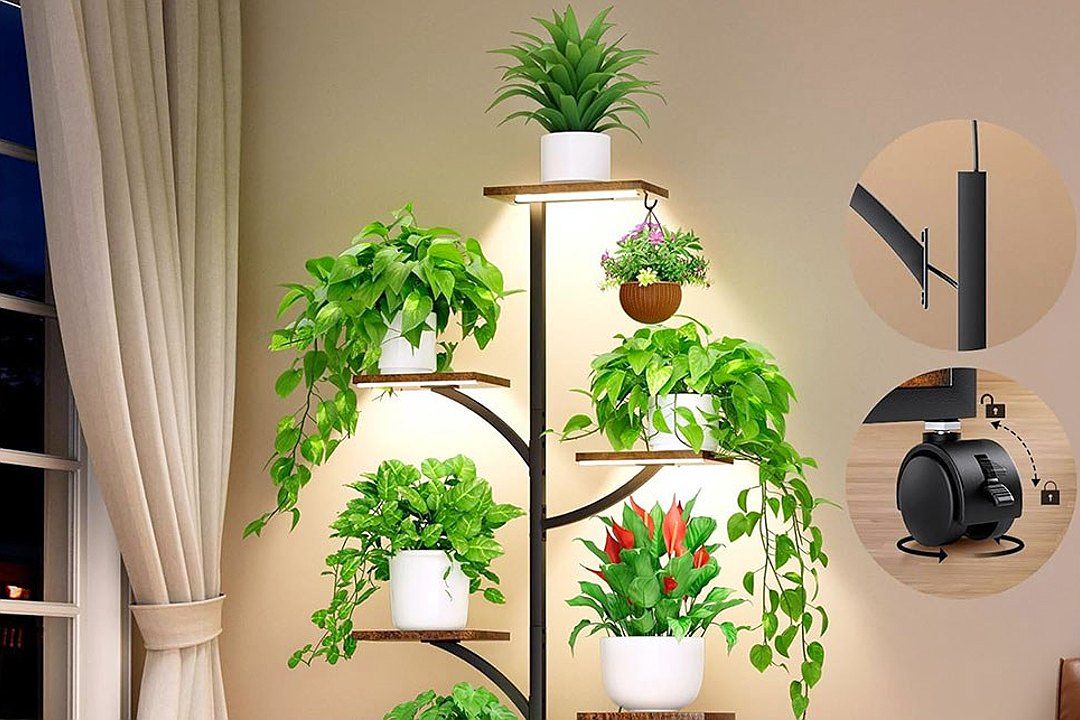
There is a difference, but for plants, color temperature is mainly about appearance. Tianci Hongye LED furniture plant stands use full-spectrum lights: 3000K (nominal color temperature of the product) looks warm yellow, and 6500K (nominal color temperature of the product) looks cool white. What matters more is whether the spectrum chart covers red and blue light.
| Item | 3000K | 6500K |
|---|---|---|
| Appearance | Warm yellow; more comfortable next to a sofa | Cool white; leaves look crisp, with an office-like feel |
| Leaf color | Slightly yellowish | Crisp |
| Effect on plants | Not determined by color temperature; check the spectrum | Not determined by color temperature; check the spectrum |
Color temperature (K; lower values are warmer, higher values are cooler) describes the color as seen by the human eye. Plants absorb specific wavelength bands in the spectrum. The general rule in horticultural lighting is that blue light at about 400–500nm supports leaf growth, and red light at about 600–700nm supports flowering and fruiting.
The misconceptions are that “only 6500K counts as a plant light” or that “warm light is useless.” Neither is accurate. Two lights both rated 6500K can differ widely in their share of red and blue light.
Before ordering, please check the color temperature and spectrum stated for the product, and look at both together. For full-spectrum plant stands with grow lights, the spectrum chart should be one of the acceptance documents.
How far should a plant stand grow light be from the leaves? Can it burn them?
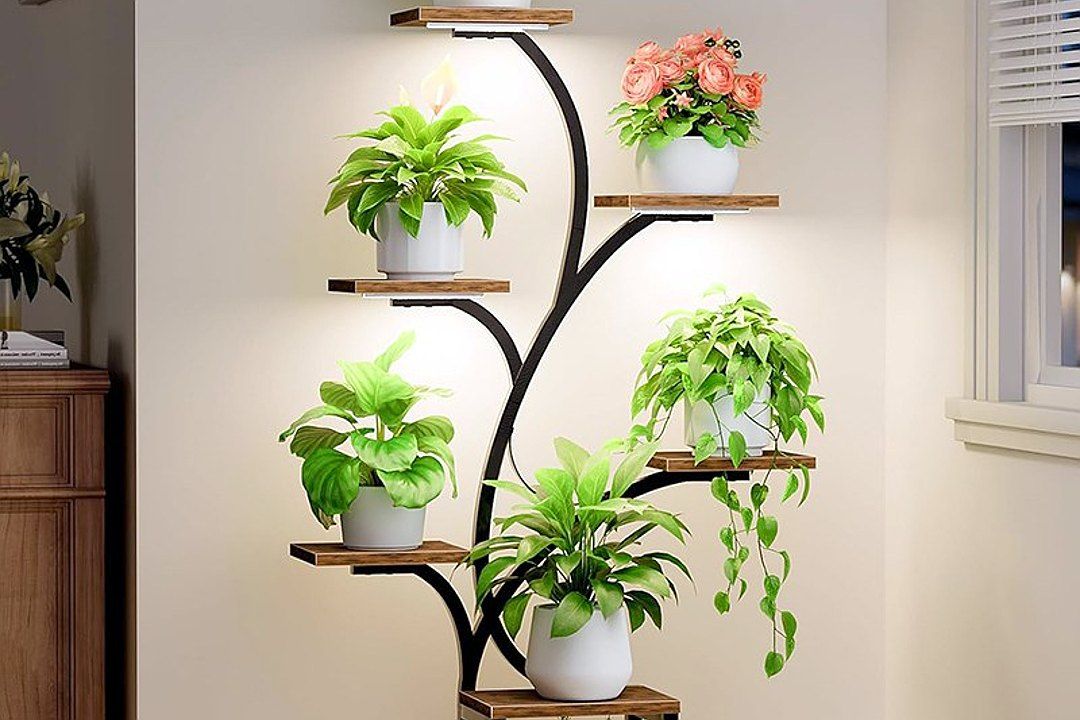
Distance is determined by the shelf structure. For Tianci Hongye LED furniture plant stands, we recommend a trial placement starting from a lower setting: if the light is too close to the leaves and set high, the leaves may be scorched. Starting at a low setting is the safest approach.
Signs of scorching are whitened or browned leaf tips, or pale patches on the leaf surface, mostly on the leaves closest to the light. LEDs themselves run cool, so the real cause is light that is too intense and too close.
We recommend the “low-setting trial placement method”:
- When placing new plants, start with a low setting and run it daily on the timer.
- Watch the leaves for fading or browning.
- If everything looks normal, raise the setting one step at a time.
- If scorching occurs, go back to the previous setting immediately, or move the pot to a lower tier.
Take particular care with tall plants on the top tier, since they are closest to the light and most easily scorched.
After a few years, plant stand grow lights get dimmer. How do you assess lumen depreciation?
Lumen depreciation is gradual. The grow lights on LED furniture plant stands have no fixed lifespan in years. Measuring illuminance periodically at the same position and the same setting is more reliable than judging by eye.
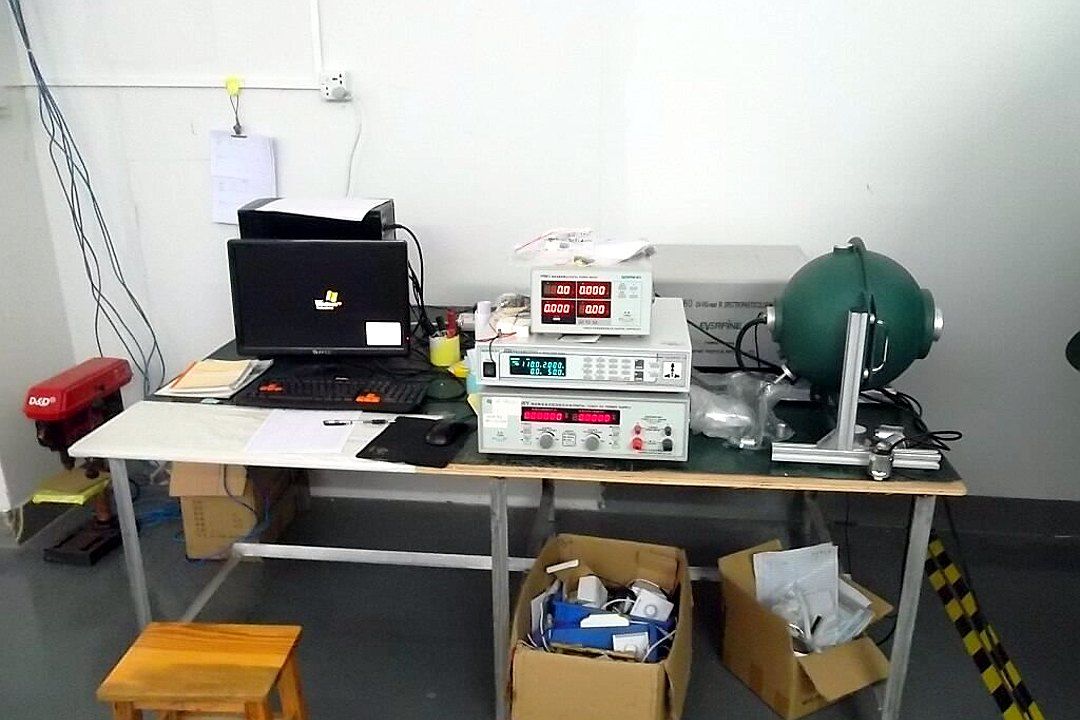
In the industry, LED lumen depreciation is usually assessed through the LED chip’s LM-80 test report, with lifespan projected using the TM-21 method. L70 means light output has fallen to 70% of its initial value (the standard industry definition under LM-80 / TM-21), and it is often used as the end-of-life point. The lifespan of the whole fixture also depends on the power supply and heat dissipation, not just the LED chips.
Buyers can self-check as follows:
- When you receive a new unit, measure illuminance at the same position on each tier and keep a photo record.
- After that, at fixed intervals, re-measure at the same setting, distance, and room.
- If readings keep falling and plants become leggy, consider replacing the light or raising the setting to compensate.
We do not state lifespan hours here without a source.
In winter, how many extra hours a day should plant stand grow lights be on?
There is no single fixed duration for winter. For Tianci Hongye LED furniture plant stands, we suggest first adding a small amount to your usual on-time, then adding somewhat more if natural light by the window is weak or the weather stays overcast for days. Let the condition of new leaves be your guide.
Winter days are shorter and light by the window drops, so plants tend to become leggy and leaf size shrinks. The test is straightforward: if new leaves are thin and elongated and the spaces between nodes stretch out, the light is insufficient, and you should extend the on-time appropriately.
Plants also need rest at night, so we do not recommend simply extending the hours, and we especially advise against turning lights on manually for long periods to compensate.
When purchasing, models with a timer are easier to manage. A plant stand with a grow light and timer avoids forgetting to switch the light off, and also keeps several samples on the same lighting schedule during testing.
When is this type of plant stand not recommended?
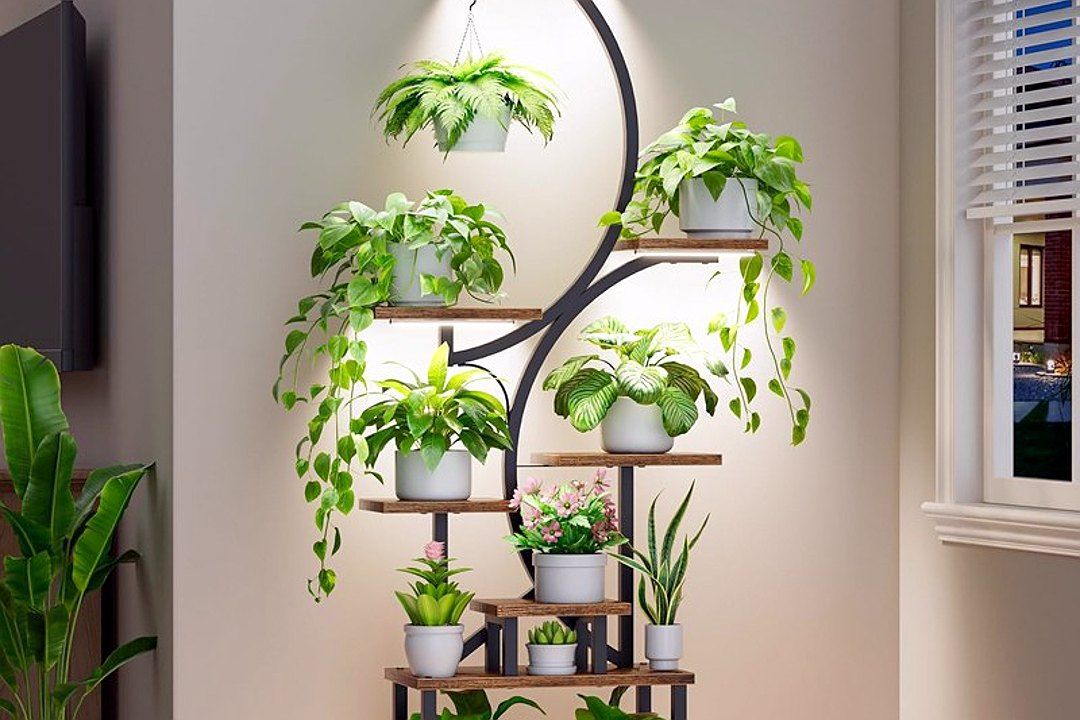
Tianci Hongye LED furniture plant stands have limits on where they suit. We do not recommend choosing this type of plant stand with lights directly in these cases: you need supplemental light for fruiting vegetables or fruit, you have large heavy pots, you must have casters for moving it, or the room has no natural light at all.
Only greenhouse lights and vertical farms meet the needs of high-intensity cultivation. Grow lights on household plant stands suit foliage plants and low-to-medium light plants. If you want to grow high-light fruiting crops such as tomatoes or chili peppers, trial-grow with a sample first rather than loading the stand based on specifications alone.
Heavy loads are also a limit. Do not put large ceramic pots on the upper tiers:
| Model | Load capacity per tier (Tianci Hongye product specification, 2025 data) |
|---|---|
| 12-Tier Tree-Shaped Plant Stand with Grow Lights and Drawer (65″) | 10–15 lb |
| 10-Tier Christmas Tree-Shaped Plant Stand | 15–20 lb |
Buyers who need casters should note that the models mentioned above come with adjustable foot pads, not casters. If you need a plant stand with a grow light and casters, please confirm with us first whether a matching model is available. Please do not modify a foot-pad model yourself.
Before ordering, in addition to plant stand wattage, confirm three things: the lamp board spectrum chart, the measured illuminance on each tier, and the timer settings. Then request one sample and test it using the “same-setting illuminance comparison” described above.